

Logo CAMS
Thought Leadership | 08.24.26

Executive Summary

Operations and maintenance (O&M) strategies for on-site power generation serving data centers significantly impact performance, reliability, and cost-effectiveness in today’s competitive market. This article examines various approaches to O&M, focusing on operational efficiency, cost structures, service flexibility, and long-term sustainability. Through detailed analysis, we demonstrate how power generation asset owners can achieve greater control, customization, and value by carefully selecting their O&M strategies.

Introduction

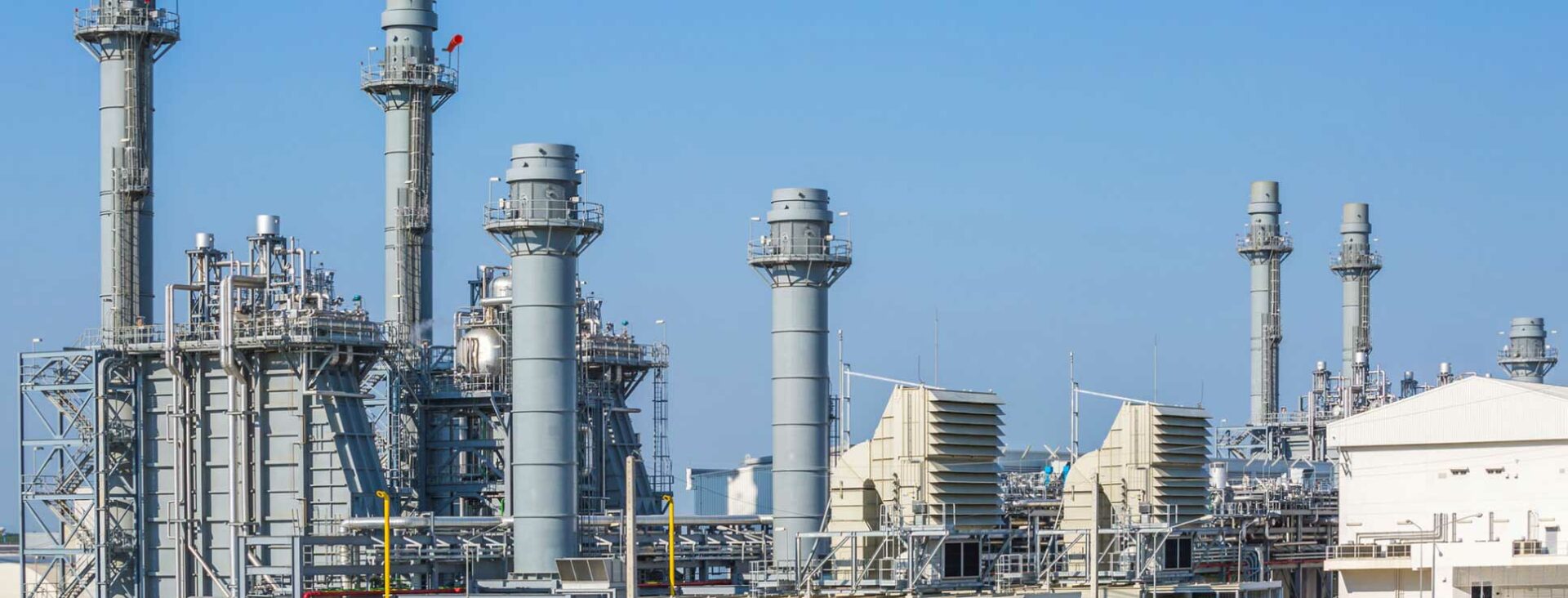
Modern data centers represent critical infrastructure requiring sophisticated O&M strategies to ensure maximum uptime, optimal performance, and cost efficiency. A core component of the data center is the electrical power supply serving the data center’s extensive computational needs. The demand for powered land and the delays in electric utility interconnections have caused data centers to increasingly look to bring their own power and self-generate their electrical power needs. Natural gas-fired electrical generators play a crucial role in ensuring data centers have access to dependable base-load power. These generators effectively bridge the gap between the power demands of data centers and the capabilities of electric utilities.

When considering self-generation of electricity, data center owners face another crucial decision between two predominant maintenance approaches:

  1. OEM Wraps: Maintenance packages provided by original equipment manufacturers (OEM) that offer standardized service contracts for their specific hardware components.
  2. Comprehensive Asset Management: A holistic methodology that integrates operations, maintenance, and optimization across all facility systems through a customized strategy.

As data center infrastructure becomes increasingly complex and mission-critical, operators must carefully evaluate which approach aligns best with their operational goals, budget constraints, and long-term business objectives. This article examines how comprehensive asset management has emerged as a superior strategy for on-site power generation serving data center facilities, providing significant advantages in terms of cost efficiency, service quality, and operational flexibility.

The Traditional OEM Wrap Model: Limitations and Challenges

OEM maintenance wraps have been the default approach for many data center operators, primarily due to perceived simplicity and manufacturer expertise. However, this model presents several significant limitations:

  • Fragmented Service Delivery: OEM wraps typically cover only the specific equipment provided by that manufacturer. In multi-vendor environments, this results in multiple service contracts to manage, inconsistent service levels across different equipment types, complex scheduling and coordination challenges, and gaps in coverage where system components interface.
  • Cost Inefficiencies: The OEM business model inherently drives higher maintenance costs due to premium pricing that supports OEM overhead and R&D budgets, built-in incentives to recommend hardware replacements over repairs, limited flexibility in service scope and scheduling, and automatic contract renewals with escalating costs.
  • Technology Lock-In: OEM maintenance wraps often reinforce vendor lock-in through proprietary diagnostic tools and software, exclusive access to firmware updates, penalties for using third-party components, and end-of-service-life designations that force unnecessary upgrades.
  • Limited Focus on Integration: OEM maintenance approaches typically narrowly focus on individual equipment rather than system-wide performance, lack cross-system optimization capabilities, miss opportunities for holistic efficiency improvements, and provide limited data sharing and cross-component analysis.

Comprehensive Asset Management: A Superior Alternative

Comprehensive asset management represents a fundamentally different philosophy toward on-site power generation serving data centers and their operations and maintenance. Rather than focusing on individual equipment components, this approach addresses the on-site power generation as an integrated whole, delivering several key advantages.

  • Holistic System Integration: This approach provides a unified maintenance strategy across all equipment and systems, coordinated service schedules that minimize operational disruption, system-wide performance optimization, and integrated monitoring and diagnostics across all infrastructure components.
  • Cost Optimization: The comprehensive asset management model delivers significant cost benefits, including cost savings of 30 to 50% compared to equivalent OEM maintenance contracts, focus on repairs and life extension rather than premature replacements, customized service levels aligned with actual business requirements, and economies of scale through consolidated maintenance management.
  • Enhanced Operational Control: On-site power generation owners gain vendor independence and freedom from proprietary limitations, flexibility to adapt maintenance schedules based on operational demands, custom-tailored maintenance protocols for specific facility requirements, and transparent documentation and knowledge management.
  • Data-Driven Decision Making: This approach emphasizes comprehensive performance data collection across all systems, advanced analytics for predictive maintenance, trend analysis to identify optimization opportunities, and evidence-based infrastructure investment planning.
  • Staffing Expertise: An experienced O&M provider is better positioned to recruit, hire, train, and manage power plant personnel because workforce management has been a core part of its business for more than two decades. Over that time, O&M providers have developed proven hiring networks, training programs, operating procedures, and retention strategies specifically tailored to power plant operations. In contrast, OEMs have historically focused on equipment design, manufacturing, and technical support, making plant staffing and long-term workforce management outside their traditional business model and area of expertise.

Key Components of Effective O&M Implementation

To successfully implement a comprehensive asset management approach for data center O&M, organizations should focus on these essential elements:

  • Comprehensive Documentation and Knowledge Management: Detailed asset inventory with complete specifications and interconnections, standard operating procedures for all maintenance activities, historical maintenance records and performance data, and knowledge transfer mechanisms to preserve institutional expertise.
  • Integrated Monitoring and Analytics: Real-time performance monitoring across all infrastructure systems, central repository for operational data from all equipment, predictive analytics for early problem detection, and continuous performance optimization through data analysis.
  • Skilled Cross-Functional Teams: Training programs that develop multi-system expertise, staffing strategies that balance specialization and versatility, knowledge sharing practices that enhance team capabilities, and career development pathways that retain expertise.
  • Strategic Vendor Management: Consolidation of service contracts where appropriate, performance-based agreements with maintenance partners, strategic relationships with key equipment suppliers, and selective outsourcing of specialized maintenance functions.

Implementation Roadmap

Organizations transitioning from OEM wraps to a comprehensive asset management approach should follow this strategic roadmap:

  • Assessment Phase: Conduct a comprehensive inventory of current infrastructure, document existing maintenance contracts and service levels, analyze historical maintenance costs and equipment performance, and identify critical systems and service priorities.
  • Planning Phase: Develop an integrated maintenance strategy across all systems, create standardized maintenance procedures and documentation, establish key performance indicators for service quality, and design monitoring and reporting frameworks.
  • Transition Phase: Phase out OEM contracts as they expire or become eligible for renegotiation, implement new maintenance management systems, train staff on integrated maintenance approaches, and establish relationships with strategic service partners.
  • Optimization Phase: Collect and analyze performance data across all systems, identify opportunities for continuous improvement, refine maintenance schedules based on actual performance data, and develop predictive maintenance capabilities.

Challenges and Considerations

While comprehensive asset management offers substantial benefits, organizations should be aware of potential challenges:

  • Implementation Considerations: Initial investment in systems and training, transition management from existing contracts, knowledge acquisition and documentation requirements, and potential resistance from equipment manufacturers.
  • Risk Management Strategies: Phased implementation to minimize operational disruption, selective retention of critical OEM relationships, comprehensive documentation of all maintenance procedures, and development of in-house expertise for critical systems.

Conclusion

Comprehensive asset management represents a significant advancement over traditional OEM maintenance wraps for on-site power generation serving data center operations. By implementing an integrated, holistic strategy for infrastructure maintenance and optimization, data centers and on-site power generation owners can achieve superior performance, greater flexibility, and substantial cost savings.

Organizations that successfully transition to this model gain not only immediate operational benefits but also long-term strategic advantages in terms of infrastructure reliability, cost control, and sustainability. As data centers continue to grow in complexity and importance, the comprehensive approach will become increasingly valuable in maintaining competitive advantage and operational excellence over the long-term.

To discuss how CAMS can ensure optimal O&M for your project, please contact Dimitri Brown, CAMS Business Development Manager, at dbrown@camstex.com.

For general information, visit our website to learn how CAMS can support your assets.
Press Release | 03.19.25

Full lifecycle power infrastructure solutions streamline data center development and enhance energy efficiency

HOUSTON–(BUSINESS WIRE)–Consolidated Asset Management Services (CAMS), a fully integrated service provider for owners of energy infrastructure assets, announced a solution to secure reliable, scalable, and cost-effective power for data centers. The initiative streamlines permitting, commercial management, operations and maintenance, while providing power reliability and efficiency enhancement to support onsite generation for data centers.

CAMS leverages its extensive expertise in managing and operating power generation assets to address the evolving needs of the data center industry. As data centers face unprecedented power demands driven by AI workloads, cloud computing, and digital transformation, CAMS’ new service launch aims to streamline the development process. By offering customized power solutions, CAMS tackles complex power challenges, ensuring reliable and efficient energy infrastructure for data centers.

“We are thrilled to offer a suite of power solutions tailored for data center operators, developers, and investors,” said Joseph W. Sutton, CEO and founder of CAMS. “Securing reliable power is critical for the successful development of data centers and often presents significant challenges. Our initiative aims to address the substantial electricity demands of U.S. data centers, supporting the growth of AI in the country.”

Comprehensive Power Solutions for Data Centers

CAMS’ collocated generation services for data centers provide:

  • Streamlined Permitting: CAMS’ subsidiary, CAMS eSPARC, navigates federal, state, and local regulations, including environmental assessments, air permits, water usage authorizations, and grid interconnection requirements, reducing project timelines.
  • Commercial Management: Services include power purchase agreement (PPA) structuring, fuel procurement, market participation, and financial optimization to maximize asset value.
  • Operations & Maintenance: With experience managing over 70 gigawatts of generation capacity, CAMS delivers 24/7 monitoring, preventative maintenance, and rapid response services tailored for data center reliability.
  • Power Reliability and Efficiency Enhancement: Advanced analytics, renewable integration, and emissions reduction strategies ensure efficient, sustainable energy use.

“Power generation and data center operations require specialized expertise,” said Dan Consie, CAMS SVP of Portfolio Management and director of the new initiative. “CAMS has built a team that understands both critical uptime requirements and the complexities of power generation. By bringing generation development in-house, data center operators can better align power availability with facility expansion. Collocated generation can also enhance reliability and offer significant cost advantages over traditional utility service.”

CAMS’ solutions initially focus on natural gas-fired generation and renewable energy. The company intends to expand its offerings as market demands evolve.

CAMS will showcase its new solution at DCD>Connect | New York March 24-25, 2025.

Articles | 03.18.24

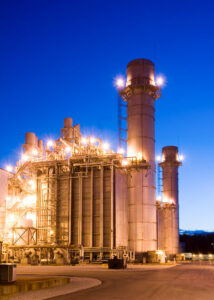
CPV Three Rivers Energy Center (TREC) is a 1,250-megawatt natural gas-fueled combined-cycle electric generation facility located in Goose Lake Township, Grundy County, Illinois. The facility began operations in 2023 and is capable of powering more than 1.25 million homes. TREC consists of two combustion turbines, two heat recovery steam generators, and two steam turbines to maximize efficiency. This new single-shaft design allows for efficient electric generation from each specific unit, independent of maintenance or outage work on the other sister unit. The plant is owned by Competitive Power Ventures and operated by CAMS.

Carbon Footprint

TREC is using combined-cycle technology and the latest “H” class gas turbine, approximately 30- 40 percent more efficient than older baseload electric generation technologies. This state-of-the-art technology combined with clean-burning natural gas replaces less efficient generating units, with offsetting carbon dioxide emissions equivalent to removing 300,000 cars off the road each year. Additionally, the facility uses advanced emissions control technology, including ammonia injection and dry low emission burners, to reduce total nitrogen oxide emissions.

Water Use

TRECs’ air-cooled condenser design reduces water use by 90 percent compared to a wet cooled facility, helping conserve valuable natural resources. The relatively small amount of water needed for process makeup comes from onsite wells. By utilizing air-cooled condensers, the facility is also able to implement a zero-liquid discharge system. Zero liquid discharge is a strategic wastewater management system that ensures that there will be no discharge of industrial wastewater into the environment. This benefits the environment through recycling and recovery for subsequent reuse for industrial purposes. This wastewater would otherwise be discharged into the Illinois, Kankakee, and Des Plaines River basin areas.

Event | 02.28.23

Since 1983, Gulf Coast Power Association (GCPA) has served Texas and the Gulf Coast as a regional electric power trade organization dedicated to promoting an improved understanding of the issues and opportunities impacting contemporary power markets. GCPA’s highly diversified membership base consists of 120+ corporate members and 250+ individual members representing virtually every segment of the electric power industry. This year, the GCPA 9th Annual MISO/SPP Conference embraces discussions on issues on MISO South and SPP.

Representing CAMS at the GCPA 9th Annual MISO/SPP Conference will be:

Contact us at the link above to schedule a meeting in New Orleans!

GCPA 9th Annual MISO/SPP Conference

Event Date: March 8 – March 9, 2023

Location: The Pan American Life Center | New Orleans, Louisiana

For further event details, click here.

Event | 02.08.23

POWERGEN is the largest network and business hub for electricity generators and solution providers engaged in power generation. Power producers, utilities, EPCs, consultants, OEMs, and large-scale energy users gather at POWERGEN International® to discover new solutions as large centralized power generation business models evolve into cleaner and more sustainable energy sources. This year, POWERGEN aims to create progressive discussions embracing the clean movement towards Destination 2050.

Representing CAMS at POWERGEN 2023 will be:

Contact us at one of the links above to schedule a meeting in Orlando!

POWERGEN 2023

Event Date: February 21-23, 2023

Location: Orlando, Florida | Orange County Convention Center

For further event details, click here.

Articles | 08.22.22

New Covert designed an upgrade of its turbines and emission control systems to improve operational efficiencyThe New Covert Generating Facility (New Covert) is a natural gas fired, combined-cycle plant, consisting of three individually dispatchable combined-cycle units and state of the art emission controls. The plant, located in Covert, Van Buren County, Michigan, has operated since 2003. CAMS has operated the facility since 2015 and the facility is owned by Segreto Power Holdings, LLC, a subsidiary of Eastern Generation Holdings, LLC. The New Covert plant can provide electricity to over one million homes.

In 2018, the facility designed an upgrade of all three Mitsubishi 501G combustion turbines to improve the facility performance to a gross nominal output of 1,230 megawatts (MW). The gross nominal output of the combustion turbines increased from 245 MW each pre-project to 260 MW each post -project, and the heat recovery steam generators increased from 125 MW each pre-project to 150 MW each post-project.

The upgrade involved replacing several rows of turbine blades and vanes on each turbine and resulted in the need for less cooling air and a corresponding increase in fuel consumption, exhaust flow rate and temperature, turbine efficiency, and electricity production. In parallel, the plant upgraded its emission control systems for both NOx and CO. Upgrades to the NOx control system involved the ammonia injection grid and the aqueous ammonia system to ensure an emission concentration of 2 ppmvd at 15% O2 could be achieved.

As part of these upgrades, over the last three years New Covert developed and implemented a new ammonia distribution system for NOx control. The improved system includes new pumps, control systems, distribution headers and nozzles, and a reformulated Selective Catalytic Reduction catalyst. As a result of these investments, New Covert reduced ammonia consumption by 7.5%.  The relative cost for ammonia was $240,000 less in 2021 than in 2018, while increasing electricity output and producing lower concentrations of NOx. Overall, the project was beneficial to the environment while improving operational efficiency.

Learn more about our sustainability efforts, operations and maintenance services and more.

Press Release | 06.10.22

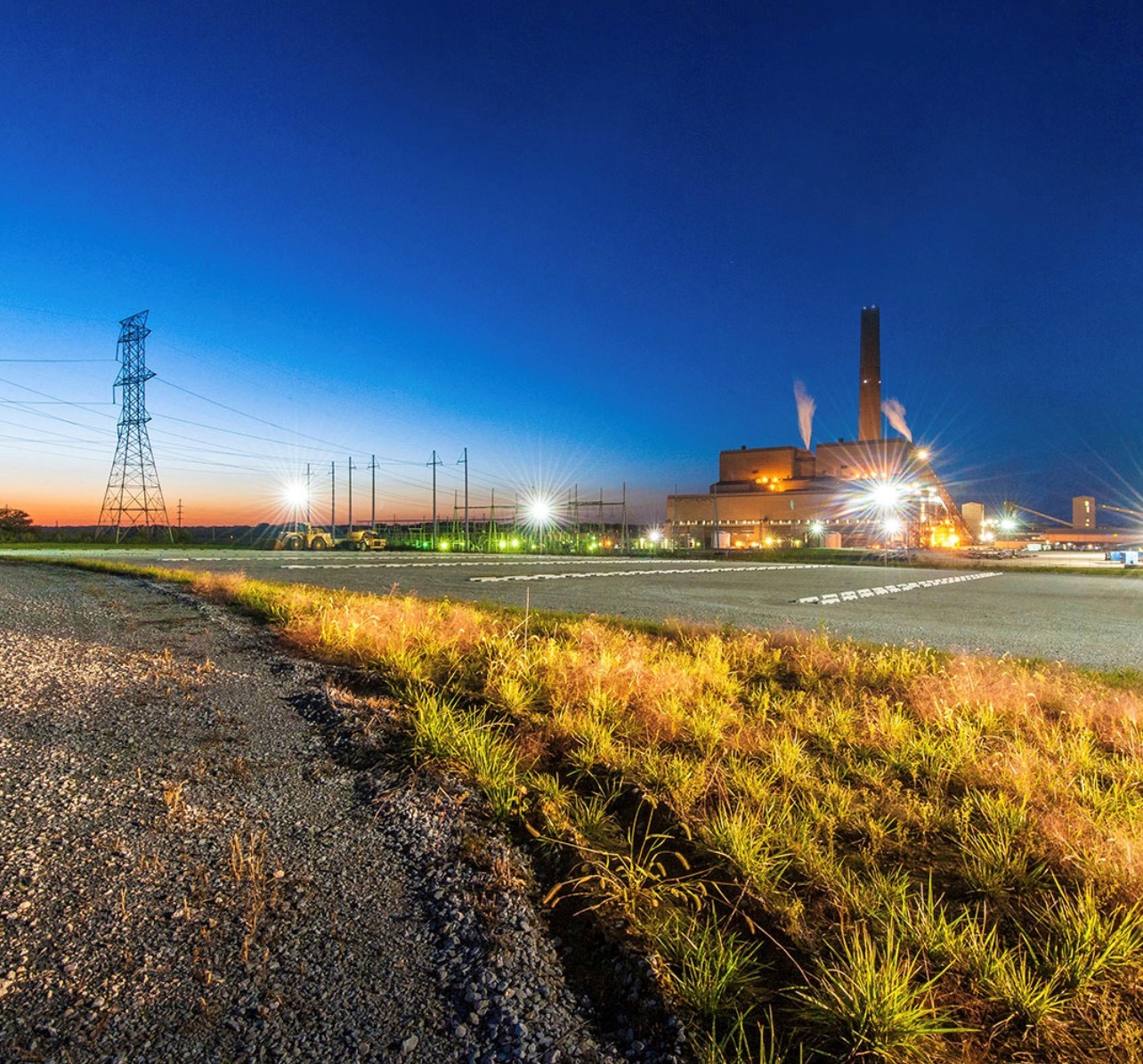
HOUSTON – (BUSINESS WIRE) – Consolidated Asset Management Services (CAMS), an industry leading asset management and operations and maintenance (O&M) services provider, announced today that it was awarded an O&M contract to support Hallador Energy Company (Hallador) and its Merom Generating Station (Merom), a 1,000 MW coal-fired power generating station in Indiana.

Located in Sullivan County, IN., Merom employs a workforce of approximately 220 and can power up to 200,000 homes at full capacity. As the O&M provider, CAMS is committed to providing safe, reliable, and efficient generation of electricity 24/7.

“We are excited to partner with Hallador Energy in providing reliable baseload power to the MISO region,” said Greg Bobrow, CAMS Chief Operating Officer. “We welcome the Merom employees to the CAMS family and look forward to their continued contributions and service.”

Earlier this year, Hallador Energy announced that its new wholly owned subsidiary, Hallador Power Company, LLC, would acquire Hoosier Energy’s Merom pant. Per the agreement, Hoosier will purchase 100% of the plant’s energy and capacity through May 2023, reducing purchases to 22% of energy output and 32% of its capacity beginning in June 2023 and through 2025. Throughout the Merom acquisition, CAMS has supported Hallador’s commercial team, providing due diligence and O&M transition services.

Heath Lovell, President of Hallador Power Company, LLC, highlighted CAMS O&M experience and said, “As we continue to see the importance of baseload and dispatchable power to mitigate the risks of both blackouts and high energy prices, Hallador Power is proud to partner with CAMS, who has the knowledge and expertise to assure that Merom is operating at its highest level.”

About CAMS

CAMS is a privately held company providing Operations and Maintenance (O&M), Asset Management, Environmental, Social, and Governance (ESG), and Optimization services for energy and infrastructure assets. We add value through superior management and operation of our clients’ assets located throughout the U.S. and internationally. To this end, we empower our employees to pursue creative and sustainable business practices in the field and at our corporate office that contribute to operational excellence, financial performance, a safe workplace, and a better community and environment. For more information, visit www.camstex.com.

About Hallador

Hallador Energy Company has been leading exploration in energy sourcing since 1951. The name Hallador is Spanish for “one who leads the way;” this has been the company mantra for strategic positioning for long-term opportunities. Beginning with roots in oil and gas exploration, then evolving to concentrate on coal development and transportation delivery, to today where we add renewables to the mix. Our customers, large-scale utilities, seek to decarbonize by evaluating the make-up of their generation. Our renewable energy generation can help them provide the grid stability they need and the shift to renewables they want. Our commitment to our employees, customers, and shareholder remains strong with this ever-evolving flexibility. For more information, please visit www.halladorenergy.com

Press Release | 03.29.22

HOUSTON–(BUSINESS WIRE)–Consolidated Asset Management Services (CAMS), a fully-integrated service provider for owners of energy and infrastructure assets, announced today that it has been awarded contracts by affiliates of ArcLight Capital Partners, LLC (ArcLight) to provide operations and maintenance (O&M) and asset management services for power generating assets representing over 10 gigawatts (GW) of capacity.

The facilities are well diversified across markets, technology and fuel type and will allow for the integration of intermittent renewable resources over the coming years.

“We are excited to manage and operate this fleet of energy assets that provide reliable power throughout the U.S.,” said CAMS Chief Operating Officer Greg Bobrow. “We have an extensive and successful track record of providing sustainable, value-added services for owners of energy infrastructure assets and are pleased to be involved with these portfolios that also have the ability to support the transition to renewable sources of generation.”

ArcLight is a leading private equity firm focused on energy and energy transition infrastructure. An ArcLight spokesperson noted that the acquisitions of the portfolios required a collaborative effort and were substantial milestones for ArcLight and CAMS.

“We want to highlight the support, leadership and coordination the CAMS team provided through each phase of the process,” the spokesperson said. “From due diligence to the early stages of our ownership, CAMS has been helpful, responsive and very strong on the transition and operational leadership. CAMS was a critical team member in successfully completing these acquisitions.”

CAMS has experience managing and operating hundreds of conventional and renewable power generation assets with over 51 GW of generating capacity. The company has been awarded 75 industry best practice awards since 2013 and has $20 billion of assets under management.